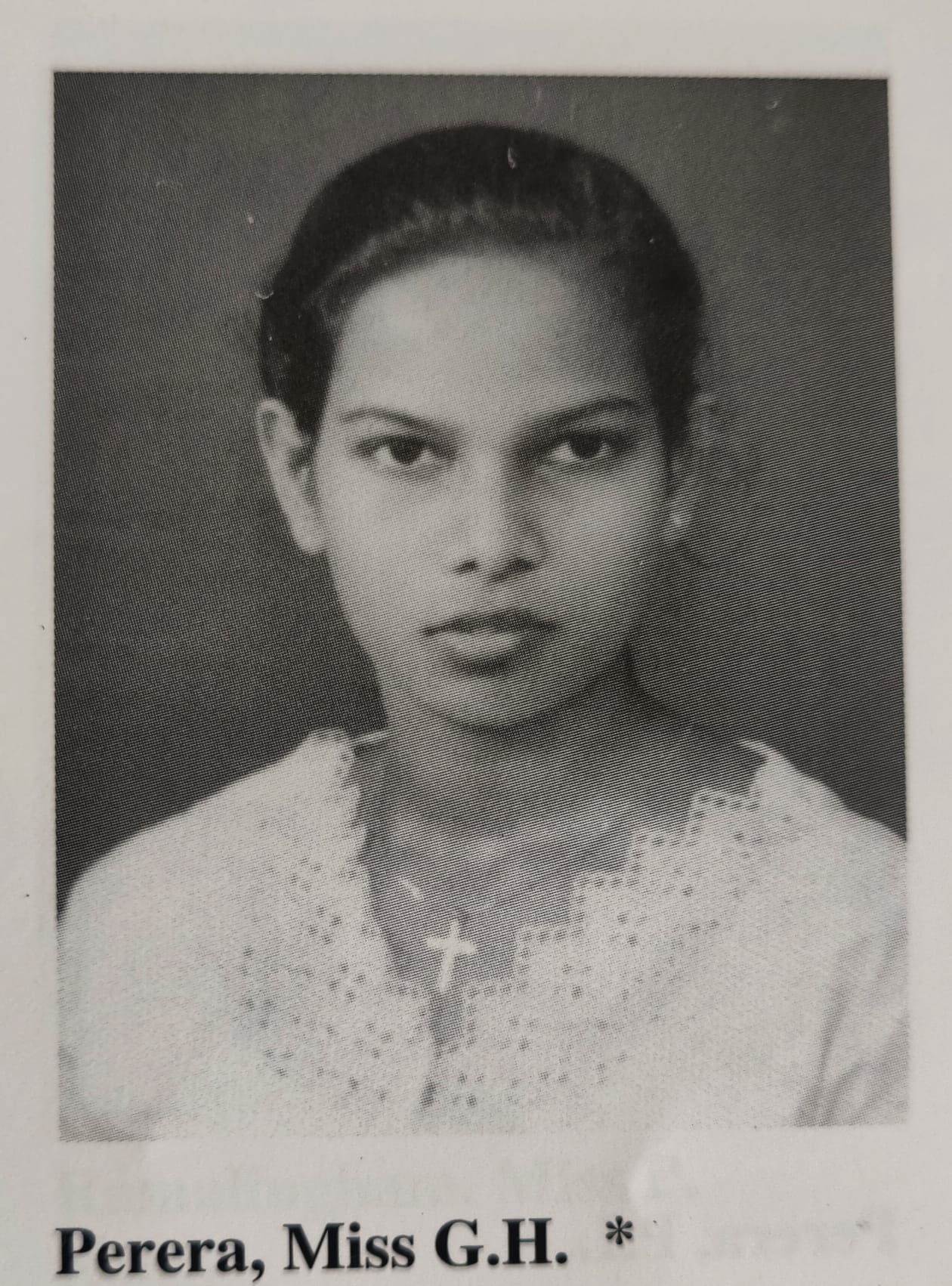
Prof Senaka Bibile- 1920-1977
"To accomplish great things, we must not only act, but also dream; not only plan, but also believe"- Anatole France, French poet and journalist.
Professor of Pharmacology, University of Ceylon
The First Dean of the Peradeniya Medical Faculty
By Mahendra Gonsalkorale
This article is derived from a research paper by three authors,
one of whom is Kavinda Bibile, the son of the late Prof Senaka Bibile.
(Return of the Ancestors. Sharing an Intangible Heritage - Kavinda Bibile / Carola Krebs / Maria Schetelich) https://journals.ub.uni-heidelberg.de/index.php/transfer/issue/view/6895
Prof Senaka Bibile will be fondly remembered and admired by those who knew him. He was a brilliant academic and a tireless fighter for a fair drug policy (rationalisation of pharmaceuticals and the development of a national pharmaceutical policy) in Sri Lanka.
There are many views on how powerful international forces sabotaged his policies. This article will not cover that aspect and will deal with his family history and his academic brilliance from childhood to adulthood.
Professor Senaka William Bibile (1920-1977), was the Dean of
the Peradeniya Medical School, Sri Lanka, Chairman of the State Phar maceutical
Corporation of Sri Lanka, and Geneva-Based International Consultant on
Pharmaceutical Policies for UNCTAD. He was the eldest son of Charles William
Bibile. Senaka William Bibile and like him, also went to Trinity College Kandy and had an
illustrious career there, excelling in both studies and sports. Trinity, provided an admixture of British
(Western) values and Sri Lankan ethos. Trinity has no
religious compunctions, students are free to follow
their own religion; the Bibiles were Buddhists in this
Anglican Church-run school.
From an early age, during school holidays which he spent in
Bibile, Senaka William Bibile accompanied his father Charles William Bibile on
his circuits in the Maha Wedirata, which inculcated in him a love and respect
for the Veddah communities. It was also his voluntary work with the Social Service Union at Trinity, with its unique and long-standing outreach programs and clinics for the slum dwellers of Mahaiyawa, that gave him an insight into another world, far removed from a privileged life in his ancestral Walauwa at Bibile and the boarding house at Trinity. These experiences with city slum
dwellers and the rural poor made a lasting impression on his young mind, with
far-reaching consequences for the good. He saw the link between ignorance, ill
health, and poverty. Thus, he began his lifelong dedication to social justice
and health care, and he aspired to be a doctor.
Sadly, at the height of his school career in 1936, tragedy
struck. His father, Charles William Bibile, died at the young age of 42.
Although the family possessed ancestral village lands, without the father’s
government salary, their economic circumstances changed abruptly. School fees were no longer affordable, and as the eldest of six school-going children, Senaka decided to leave Trinity to seek employment. But the visionary principal
of Trinity at the time, the Reverent Robert Stopford (1901-1976), who later became the Bishop of London, would not hear of it. He searched for a benefactor
and found Trinity alumnus D.B. Ellepola, who saw the promising talent Senaka
displayed and agreed to help with his school fees. In his final year at
Trinity, Senaka also won the coveted Fraser Scholarship.
Entering Ceylon
Medical College with no funds, Senaka had to top the cohort each and every year
to win the one scholarship on offer. That only sufficed to pay his university
fees. At his dingy ‘digs’ in Borella he had to wash dishes and clean drains to
pay for his frugal meals and bed. In the midst of all his examination pressures
and financial worries he played rugby for the university team and took part in
various extra-curricular activities. Yet, his academic achievements did not
suffer, and they speak for themselves. He passed his First, Second, and Final
M.B. Examinations all with First Class Honours, and won the coveted Djunjishaw
Dadabhoy Gold Medal for medicine and the Rockwood Gold Medal for surgery in his
finals.
Later he obtained his Ph.D. from the University of
Edinburgh, was the first Professor of Pharmacology at the Faculty of Medicine
in Colombo, then became Dean of the Faculty of Medicine in Peradeniya. During
this time, he formulated the innovative ‘Rational Drugs Policy’ for Sri Lanka
and set up the Pharmaceutical Corporation, better known as Osu Sala (note by MG- Osu Sala was the first direct SPC retail outlet to the Public. Before the SPC acquired it, it was a Chinese restaurant). It was
this pioneering work that carried him into the international sphere, working
for the UN Conference on Trade and Development (UNCTAD) in Geneva in
conjunction with the World Health Organization, setting up rational drugs
policies in developing countries. Canada has also now adopted the generic drug
prescription, which was first formulated in Sri Lanka by Senaka Bibile in the 1970s. The Health Action International (HAI) newsletter of April 1990,
published by the International Organisation of Consumer Unions (IOCU), stated
that:
“Singlehandedly he conceived, formulated, developed and
implemented a people-oriented drug policy in Sri Lanka in the early 1970s.
The pharmaceutical reforms initiated in Sri Lanka by Bibile have been
transformed into a global action programme.” During the 35th World Health
Assembly in Geneva in May 1982, a senior WHO official stated: “[...] the
philosophy guiding WHO’s Action Programme on Essential Drugs is based on that
recommended by the late Professor Bibile of Sri Lanka.” In 1993, Dr. Hart, the
pioneer of the Australian Pharmaceutical Policy Board, remarked when he arrived
in Sri Lanka: “Sri Lanka is the summit of a mountain, Senaka Bibile is a
glittering lamp on that top. By the glow of that light we, the other countries,
formulated the drugs policies.”

Dr Gamini Buthpitiya, Dean of the Peradeniya
Medical Faculty, said at the Bibile Memorial Oration held to commemorate the
50th anniversary of that medical college in Peradeniya: “At the very outset,
let it be said that Senaka’s contribution to this issue was always based on
sound scientific information, prudent economic principles and practical common
sense. Nowhere can you see the sway of ideology, rhetoric or emotion in his
approach to this problem.”
Tragically, Senaka William Bibile died at the relatively
young age of 57 of a heart attack in 1977 while on a mission for UNCTAD in
Georgetown, Guyana. On February 13th 2022, on the 102nd anniversary of his
birth, the government of Sri Lanka and the doctors at the Bibile Regional
Hospital joined forces. They renamed Bibile Hospital the ‘Professor Senaka Bibile
Memorial Hospital’.
important Footnote added on 17.6.2024 on other significant people who were responsible for the setting up of the SPMC.
The Government of 1970 appointed Dr. S.A. Wickremasinghe and Dr. Bibile to lead a commission of inquiry to investigate the issue of branded pharmaceutical drugs. This Bibile - Wickramasinghe Report served as the foundation for establishing an essential drug manufacturing entity owned and operated by the government of Sri Lanka.
After Bibile - Wickramasinghe Report, the government embarked on importing essential medicinal drugs as the first phase of the plan. The second phase was manufacturing a number of selected essential drugs within the country. In 1985, the Ministry of Health prepared a proposal for the establishment of a Formulation Centre for Essential Drugs and it was accepted by the Japan International Corporation Agency (JICA).
As it was recommended to establish a national policy and a state body to regularize the pharmaceutical drugs trade, Sri Lanka State Pharmaceuticals Corporation was founded. In 1971 the Cabinet Minister of Industries, T.B. Subasinghe appointed Professor Bibile as the founder chairman of the Sri Lanka State Pharmaceuticals Corporation.
-From the SPMC website-