Showing posts with label Miscellaneous. Show all posts

Sunday, June 7, 2026

Why does politics have to pollute sporting events? Srianee Dias

Why does politics have to pollute sporting events?

Srianee Dias

Mirra Andreeva won the women’s singles title at the French Open yesterday (6.6.2026).  She is Russian but was competing as a ‘neutral’ athlete.  She reached the finals after defeating Marta Kostyuk from Ukraine in the semifinals.  After losing the match, Kostyuk ignored Andreeva and walked over to shake the umpire’s hand.  She chose to play against Andreeva, but like several other Ukrainian players, chose not to shake the hand of her Russian opponent.  It is difficult these days to entirely eliminate politics from sports, but it is my opinion that when players choose to compete in an event, they should act graciously towards their opponents in a sportsmanlike fashion.  The athletes are not responsible for the political conflict. 

In the finals, Mirra Andreeva defeated Maja Chwelinska of Poland 6-3, 6-2 to claim the title. She was congratulated warmly by Chwelinska.  Andreeva is only 19 years old, and this is her first Grand Slam title, although she won two major championships in 2025.  She is the youngest winner of the French Open since Monica Seles won in 1992, when she was 18.  Andreeva has personality, charm and a sense of humour.  She is a refreshing change from grumpy Aryna Sabalenka, who is currently ranked No 1. 

Sabalenka is from Belarus.  She and Andreeva have. been banned from competing in international events under their national flags.  This decision against the Russian and Belarusian athletes was made by the International Tennis Federation in 2022 when it suspended the Russian Tennis Federation and the Belarusian Tennis Association from all 4 major tournaments, as well as team competition (Davis Cup and the Billie Jean King Cup), following the invasion of Ukraine by Russia.  To her credit, Sabalenka has not renounced her nationality, unlike some other athletes. I applaud her for that decision, because it probably cost her some lucrative endorsements.  I think it is unfair for hardworking athletes to be penalised for the decisions made by politicians in their respective countries. 

In the past, we’ve seen many similar situations.  South African athletes were prevented from competing in international events for many years because of the South African government’s apartheid policies.  I am told that the Pakistani and Indian cricket players do not shake hands with each other, even though they play against each other. 

The FIFA World Cup is just beginning with matches being held Canada, USA and Mexico.  Iran’s national team, Team Melli, has qualified to play, but the team is being hampered by visa problems being experienced by their players and officials.  I read that Tehran has now arranged for the Iranian team to be based in Tijuana, Mexico rather than in Arizona, USA. 

Sporting events can play a role in bridging the existing hostilities between nations. The athletes are heroes in their home countries.  Any positive experience they have during the competitions will carry over to their fans at home.  

Many athletes have also used their voices and influence outside their sporting careers.  Billy Jean King and Megan Rapinoe have fought for equal pay for female athletes. Wilma Rudolph, Muhammad Ali and Kareem Abdul Jabbar were very active in the Civil Rights Movement.  Lewis Hamilton has been championing diveristy in F1 racing.  They have that privilege and freedom, but it is my opinion that these activities should be separated from the actual sports competitions.  The sporting events should be confined to the sport, and politics should be set aside during the competitions.

Friday, July 28, 2023

WE LIVE IN VERY INTERESTING TIMES. Sent by Suri Amarasekera

 WE LIVE IN VERY INTERESTING AND FUNNY TIMES

Author unknown  Sent in by Suri Amarasekera. I thought it was worth sharing. Thanks, Suri

1. We live in times where we see many humans but not humanity.

2. We live in times where the rich have more rooms than children, and the poor have more children than rooms.

3. We live in times where smartphones bring you closer to those who are far but distance you from those who are closer.

4. We live in times where we open Facebook more than Holy Book;

5. We live in times where a single mother can look after 10 children, but 10 children can't look after a single mother;

6. We live in times where the rich walk miles to digest food, while the poor walk miles to search for food;

7. We live in times where women are paid to be naked, while others have no clothes to cover their nakedness.

8. We live in times where our contact lists are huge, but our relationships are poor

9. We live in times where our possessions are more, but our appreciation is less;

10. We live in times where we know how to earn a good living but somehow forget how to live good;

11. We live in times where many know the price of everything but not the value of anything

Indeed, we live in a strange world. May God help and Guide Us

Just had to share this 


Friday, December 4, 2020

The Blog – The perils, panacea and prognosis


The Blog – The perils, panacea and prognosis

Nihal D Amarasekera

 “We are all now connected by the Internet, like neurons in a giant brain”.  Stephen Hawking

The internet is one of the finest inventions of the 20th century. It has the ability to connect with every home in every continent. With such great power and potential there is a need for security and safeguards too. The United Nations say: “The Internet should be governed on the principles of human liberty, equality and fraternity,” wisdom derived from the national motto of France.

Ours is a unique batch of medical students for its academic brilliance, tribal unity and bohemian lifestyle. After those glorious years in the Faculty, we needed a vehicle to keep us together and we found an ideal place on the internet. The blog has been riding the ether for just a decade with great success. It has always been a place to meet and greet and exchange views without fear or favour. As it is said ‘facts are sacred but comment is free’ and that has been our mantra. The only taboo is politics. The blog has remained a close community and a social gathering online. This has become our ‘Pub with no beer’. 

The Blog is a forum of friendship and it brings to the surface the loyalty and the camaraderie that existed all through the days in the faculty. The chats that go on as comments, sometimes endlessly, reminds me of the animated discussion we had walking the long corridors of the GHC with the stethoscope around our necks, joyfully swinging our knee hammers. All are welcome to join us and I’m certain it will give you that intuitive experience of "déjà Vu". 

Once a year in the in the month of May we celebrate the lives of those who joined our batch in 1962 and have now departed this world. The Poems, songs and articles that appear on the Blog are specially written for the occasion and are a poignant reminder of the friends we have lost and the many good times we have enjoyed. 

Lucky Abey did the initial groundwork and started the blog way back in time. Maintaining the blog is great fun but I’m sure it has its moments. This can be an onerous task and a stressful one too. Both Lucky and Mahendra have given their precious time to keep it alive. There is no advertisement revenue and there is no money to be made. They give us their time free. We thank them for their support and their friendly management style and admire their commitment to the cause. 

The blog is a Godsend in this time of Covid when Reunions are relegated to a distant dream. For me personally, the blog has been wonderful to communicate my thoughts. It has been a tremendous help to keep in touch with friends. The comments are by their very nature a forum for a chat and much of that goes on when friendships are reconnected, memories are recalled and views are expressed. 

The Blog has been laid out for easy access and it is well managed for our batch friends to contribute and comment. The Blog Managers can take the horse to water but they can’t make it drink. It is a sad fact that the regulars who contribute to the blog are few. Their numbers can be counted on the fingers of two hands. There are the ‘silent guests’ who fly in and out of the blog without leaving a trace. The ‘silent majority’ never visit the blog.  This is their personal choice which we respect.  Whenever there has been an effort to drum up support for the blog there are many who promise fervently but those promises fall by the wayside only to be lost in the rough and tumble of life. It is most heartening to hear people say “Blog is a nice idea” or “do keep it going” but it needs your active support. The ancient Biblical proverb “the spirit is willing but the flesh is weak” says it all.  We all realise and eminently aware life does get complicated at times. The profession, health and family must take precedence. Then the blog can be the last thing on our minds. We do understand your inability or reluctance to join. We send you our best wishes. If there are any batch-mates who wish the blog to continue and are free to join I would urge you please to contribute or at least make comments. Show us your presence in the blog and that you care. 

Like most digital tools and devices the Blog has its inherent problems. The inability to use Safari to make comments on an iPad is a great drawback. But this is not an insurmountable problem. Lack of technical skills should not be a hindrance in the 21st Century. For those who have technical problems accessing or using the Blog help is at hand. Mahendra is a fine teacher, a friend and confidant to all. He will guide you through the various stages and sort out any specific issues. One can also send any comments to Mahendra by email which he will publish on your behalf. 

With the passage of time, the numbers of regulars have dwindled. We all miss the late and great Razaque Ahamat. With all his pranks and foibles he entertained us on the blog with his special brand of cheeky impish humour. He lived in Scotland. I remember once, perhaps I overstepped the mark and asked him why he lives so close to the North Pole and if he uses a snowmobile to get around. When I phoned him to apologise I was so pleased he had taken it as a joke and we were able to have a laugh together just like in our youth. Even now as I peruse the blog I see him in my mind's eye wagging his finger and sporting that mischievous smile. 

There are times when the contributions to the blog receive very little response. This is understandably disheartening to the authors who have toiled for days or weeks to perfect their pieces. It is true some of you may not like what you read but it has been done with the best of intentions by our very own. The contributions and comments are drying up and there is now a sense of foreboding.  Are we witnessing the last gasps of a dying Blog? I am pleased Mahendra has done a survey, I hasten to add Not a witch-hunt, to decide on a way forward for the blog. Now, the people have spoken. Long live personal choice. It seems like we will let nature take its dignified course!! 

Those in our batch who do not visit the Blog will not be reading this. I do wish the rest will pass on the message to join us and to be in touch in these our final laps of our journey. We have the amazing ability to reach the blog from the comfort of our own homes with a few clicks of the rodent. 

The Blog is a repository of batch memorabilia. If anyone wishes go down memory lane I would urge you to read the prose and the poetry in the blog from its very beginning. It is indeed a tremendous collection worthy of preserving for posterity. The whole blog is an archive of the history of our batch from the rag at Registration right up to the endless turmoil of the Finals and everything else in between. The colourful descriptions of the Men’s Common Room and it’s raucous parties, the elegant dances at King George’s Hall and the unforgettable final year trip are memories to behold. There are also stories of the busy internships and how life panned out for us in the wider world. There are fine tributes to our departed colleagues and also to our professors and clinical tutors. This indeed is a part of the history of the Faculty of Medicine in Colombo and I wonder if they care to get a copy for their archives. 

We all hope the blog will survive the long silences and the ravages of time. So far the blog has served us well. The onus is on each and every one of us to decide. Nothing is forever. There will come a time when the person managing the website will have no other choice but to pull the plug on the blog and end it all. What comes to mind is that famous quote from Shakespeare’s Julius Caesar when Marcus Brutus drove the knife into Caesar “Et tu Brute”

Sunday, September 6, 2020

When does a child first begin to remember?

When does a child first begin to remember?     by Kumar Gunewardene

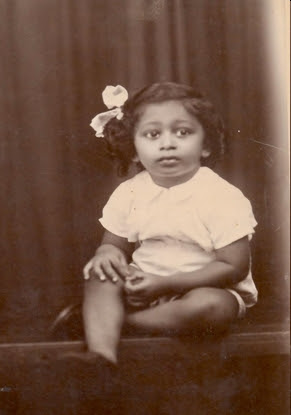
Why do certain things remain embedded in one’s memory, and others are forgotten? Rather than pitch into these shadowy depths, I choose to amuse myself; by writing about what I remember of my childhood. (The photo is one of me in early childhood)

ALICE

My first memory begins at the age of about four, a good looking chubby child with long curly hair, walking around the village temple, holding onto my equally chubby maid Alice.A monk comes up to us and says ‘give us this boy, he will make a fine priest. She hugs me tightly and yells “no I will never give our Podi Ralahamy (little chief) to you or anyone else”. We hurry back home, she clutching me firmly.

Alice is a girl of about eighteen years who loves me and my brother as if we were her own. She is dark-skinned and buxom with a friendly face, always smiling. Alice is not her real name. Our mother would change their rustic names to ones she could pronounce easily. She came to us from our father’s village Baddegama with Loku Thatha (father’s elder brother). He was Loku Ralahamy, the big chief; hence her pet name, Little Chief for me. Her domain was the curry kitchen, but she somehow would find time to play with us. We loved to run around her, like the ragged rascals we were. She would make feeble attempts to catch us, always failing by inches. Whenever mother was away, she would feed us tidbits, cautioning us not breathe a word.

From time to time she would have fainting spells which were thought to be hysterical. Once when she fell on our doorstep, my brother admonished her, “Alice aren’t you ashamed of yourself, there are men here“. She woke up immediately, perhaps because she was in awe of him or more likely she regained consciousness when she lay flat. Now I realise there may have been a physical basis; as they were getting more frequent her father took her back to the village to subject her to an exorcism; it was a common belief that devils would enter the bodies of young women, and the only cure was an all-night devil dancing ceremony.

She would bathe us at the well, which was very deep, and right at the back of our extensive yard; it was a focal point of our lives then; we did not have running water. She would draw, buckets of deliciously cool water and pour them over us, soap all over and finally wipe us dry. We loved this ritual.

We always had cousins from our village, staying with us. All of us would bathe together at the well. Sometimes the girls would ask me to rub soap on their backs and I would experience a faint tingle of pleasure, possibly the earliest awakening of sexuality. Once when in indulging in horseplay in the kitchen I backed onto a young aunt and felt the same. I still remember the softness of her body.

An amusing incident which I would rather forget happened at the well. As a pre-teenager, I was desirous of building up my forearms and shoulders and would draw heavy buckets of water from the well. I was assisted by a young maid, Irene, who would have been very pretty except for her slightly uneven teeth. When I had brought up the bucket to the mouth of the well she would lift and pour it into the storage tank. Once, unfortunately, the half sarong I was wearing slipped down revealing all. Just at that moment, our laundrywoman Ella came by and she threatened “haha little master, this is what you two are up to. I will tell madam” We were petrified, Irene more than me but luckily Ella didn’t carry out her threat. Irene a lissome teenager from an adjoining village was very fond of me and mother may have noticed. She was primarily the cook but would bring me my cup of tea in the afternoons. I would ask her to stay until I finished my tea. I had seen her sleeping on a reed mat on the floor at night and had felt a pang of pity. I surreptitiously would check whether she got a share of the delicacies we had. But Mother was very evenhanded in such matters. Ella, tall and lean with a full head of grey hair and aquiline nose was our laundrywoman from time immemorial and Mother had great faith in her for her efficiency and probity. There was no doubt in our minds as to whom she would believe.

JANE

Alice’s understudy was Jane, a mischievous brat of about eleven years. Mother shaved her head on arrival, presumably on account of head lice. I remember her as a supreme storyteller. Whenever I was confined to bed with a minor illness she would sit on the floor and in her soft child’s voice go on till I fell asleep. My favourite was our pilgrimage to the sacred cities, Anuradhapura and Polonnaruwa and the Island hermitage Seruwavila. She remembered every detail, and I would relive the entire journey each time she related it, perhaps embellishing occasionally.

Around this time there was a series of burglaries in our neighbourhood committed by one individual Kara. We escaped as father was a good friend of one of the village elders; no one could override his jurisdiction. One day Jane ran to mother shouting ma’am I saw Kara in the village. Mother shushed her and kept her indoors for a few days, fearing for her safety.

SAMUEL

Alice and Jane were followed by Harriet and Samuel, a hardy young boy from Matara noted for tough street smart youths. He was our constant companion and playmate as well as our attendant. Harriet was pleasant but a bit distant, or maybe we were still pining for Alice. He would always be around us like a shadow and join us in our cricket matches mainly as a fielder. When given a chance to bat his joy knew no bounds, but it would be short-lived as he would get out soon.

Samuel followed us to the rice paddies where we caught small fish with pillowcases. They would be offloaded to bottles filled with water from the rice fields sprinkled with moss and weeds; they did not survive long. This was not approved by mother and she soon put a stop to it.

Samuel was so protective of us, even ignoring his own safety; he tried to save me from a vicious snarling bitch by lifting me off the ground and twirling but to no avail. She bit me on my left calf and I carry the scar to this day. We had gone to our doctor for our three monthly worm treatment (a white mixture) and as the doctor hadn’t arrived we decided to go to the beach. Disastrously we passed this animal who had just given birth to a litter. I'm not sure why she picked on me. Samuel was more upset and scared than me but had the wound stitched and got me back home safely. Father was furious and had the animal destroyed and checked for rabies. I was sad as she had only acted on some misplaced instinct and felt even unhappy for the pups who had lost their mother. Father’s only concern was me; I escaped a painful course of injections around the belly button as the animal was free of rabies. I told him how valiantly Samuel had tried to save me and he was let off.

AKURU KIYAWEEMA (FIRST READING OF LETTERS)

The traditional ceremony of the first reading of letters occurred around this time. This was considered very important for a child as it could augur high educational achievements in the future. At a time determined by our astrologer, Father sat me on his lap, read the first letter of the Sinhala alphabet (A/Ah) and then guided me. He then got me to copy the letter on a slate board. Mostly this rite was performed by a venerable monk; but Father was the appropriate person for me and brother on account of his love, intelligence, and erudition. As befitting such an important ceremony, there were relatives, milk rice and sweetmeats and chanting of pirith in the background.

NKRW

Mother bought a calf and named “him” NKRW after me. N was for Nikape our village. This was to keep the grass in our yard trimmed; a virtual lawnmower. I recall the poor animal, on all fours being branded by a hot iron rod. It turned out that it was a “her “ when she became pregnant. She was very boisterous and tore even the stoutest ropes and run away. Our houseboys must have cursed her, as they sometimes spent hours chasing after her. But I loved feeding her bananas, stroking her forehead all the while. She never butted either me or my brother when we took jak leaves and bundles of grass or water to her. My mother said many a time that her boisterousness was due to her being named after me.!!! She provided us with fresh milk for a while. Eventually, maintaining two animals was too much and she was given away. She must have felt some sadness too as she tossed her head and looked at both of us before being led away.

 As siblings, we were very close but did have our flare-ups. He would never punch me but instead pull my ears. I never punched him too; once I did hit a cousin in the midriff and he became very breathless for a while. My martial tendencies were suppressed for some time after that even though he didn’t complain to the elders. Mother shouted at brother many times saying I don’t want a son of mine to be called a long-eared lout. She wasn’t aware of the Sinhala royal dynasty the Lambakarnas so-called because of their long ear lobes.

PETS

At such times I wished for a sister who would intervene with wisdom and authority. Mother wanted a daughter too, but father was secretly pleased that there were no more children. As a compromise, we had pets. Pat was my brother’s adored one. He was a large dog with a pure white fluffy coat and a bushy tail. Gentle and playful, he would, when unleashed follow brother around for hours. Suddenly he became listless and was discovered to have ascites (A belly swollen with fluid). Father got a vet, who laid him flat on a table in the garden, anaesthetised and then drained two buckets of fluid. That was too much for his tired body and he never woke up. Brother was inconsolable and wept for days, shouting repeatedly, that man killed my Pat. Our boys solemnly buried him in the backyard. We did not watch it.

My brother had an extraordinary rapport with all our four-legged friends. I too had it but to a lesser extent. We had a fierce black cat only brother and mother could get near. He would snarl at all others, but would allow the brother to prick him with pins!! He claimed they were injections to cure him of hitherto unknown diseases. Pat’s death put us off pets for a while. Father got a white bull terrier to console us, but we never really got along and he was given away.

A couple of years later a pup was abandoned on our doorstep. Hearing her pitiful cries, mother took her in and fed it milk and small pieces of bread soaked with milk. She was named Dingy and became our most beloved pet ever. She must have had a subconscious memory of her past and would always follow the mother and sleep on the floor beside her bed. This was in contrast to her daughter Beauty (so named by brother), who jumped uninvited to our beds and would be difficult to dislodge. We loved both mother and daughter equally and they, in turn, loved us in no small measure. Their joyous barking and tail wagging when we returned home would thaw our weariness, and give us a second wind. An aunt once saw Beauty sleeping at my feet, and Tikiri the cat sleeping on my pillow with me. She chased them away; but when they were certain that the ogre had gone, stealthily crept back.

I remember well the day Dingi passed away. She had been ailing for some time, and mother nursed her propped up on cushions in our sitting room. She carefully fed her milk, water and medications with a teaspoon. That morning when I was leaving for work, she slowly lifted her head; I patted her and she lay back. When I returned home, she was gone.

Beauty’s son Sandy the first, was a terror, unlike his mother and grandmother. However, he must have inherited some of their genes, because he was lovable at times. Our current crossbred pup is named Sandy the second.

My favourite cats were the twins Tikiri and Sokiri, the latter being exceptionally alluring. I would wake up early to study, but they would jump up on my desk and parade up and down till I fed them. They delighted in bread with a generous layer of butter and marmite but would eat it only when cut into little squares. I could resume studies uninterrupted only after that. Sadly Sokiri was knocked down by a car and died instantly. From then on Tikiri became my constant companion. Whenever he saw me seated, he would settle on my lap purring softly all the time. Thus he would listen to all my programs and cricket commentaries on our vintage HMV radio, totally relaxed and comfortable. Personalities like John Arlott, Brian Johnston, Alan McGilvray and Johnny Moyes, made cricket come alive, even without pictures. Though matches were played thousands of miles away, in venues we could only imagine, I was glued to the radio with Tikiri ensconced on my lap.

VILLAGE SOJOURN

Walking on the rice paddies was such fun. The soft breezes would caress and cool one’s body and the lush greenery was easy on the eye. There were birds twittering all the while; squirrels would dart in and out of trees and some days butterflies of all colours and sizes fluttered aimlessly.

I particularly recall walking on the banks of rice fields in Baddegama with a beloved cousin Sumana Akka (elder sister).She would walk in front and would hum folk songs softly. She was tall, dark-skinned, bespectacled and always wore sari. Her best feature was her face which diffused a gentle kindness. When the going was rough, she would fall behind us and halt if we were tired and get a villager to pick a young coconut. It was fascinating to watch them shaving off the husk with a cleaver and open up a hole big enough for us to drink the freshwater. Her mother, (my father’s cousin), her brother and she lived in a large bungalow atop a hill on a tea plantation Weihena in a village adjoining Baddegama. There was a well maintained large garden with shade and fruit trees, giant ferns and flowering shrubs and we would spend many joyous hours playing on our own. Her mother had arranged a devil dancing ceremony (thovil) to cure the father of late-onset asthma which was not responding to western medicines. The asthma finally disappeared only after he stopped smoking, cigarettes and then a pipe. His excuse was the cold climate of the hill country where he was stationed. We did like the fragrance of the pipe tobacco.In1956, the Buddha Jayanthi year, before we went to India on a pilgrimage he forsook both alcohol and smoking. Sometime later he would resume having a nightcap but never again smoke. The second sibling Willie Aiya (elder brother) ran the plantation. In the evenings, after a few drinks, he would keep to himself. He was a tall good looking man, boisterous at times, who would brook no nonsense from his workers or the villagers. When he found time for us he was mild and affectionate and would drive us to town and buy ice cream. It was a great shock to us when he died young presumably drowned. There were dark rumours which swelled our agony, but these were never confirmed.

There were two other siblings Sena and Ananda. They all respected father and were very fond of us. Sena and Willie were physically similar (tall and light-skinned ) but poles apart in style and disposition; Sena westernised and polished, Willie a rough diamond, but both captivating in their own way. Sumana and Ananda were tall, dark-skinned , gentle, kind and considerate. They were like our own flesh and blood.

Little things could keep us amused for hours. The older male domestics would get us to squat on the heavy brushes which they dragged up and down to polish the red cement floors. Our weight would help to bring out the shine of the Cardinal polish which would have been applied about an hour previously.

Another ritual we enjoyed was being fed at mealtimes. Mother and the great aunt who lived next door were our picks. The rice and curries would be rolled into soft small balls and inserted into our mouths. Between mouthfuls, greataunt would relate stories which would include our misdeeds. One day I had knocked down a full bucket of water. Annoyed, she threatened to report this to father when he returned from work. I had said innocently but Achchi (granny)  the water would have dried up by then. Laughter overcame her anger. Every month on her pension day she would bring chocolates for both of us. I had said “Achchi I’m going to kill you”. “Why son, don’t you love me anymore”. “No, I do love you; but when you die you will go to heaven and send us chocolates every day”. She was very perceptive and told, me out of the blue one day, “puthe you are a very good boy and will give away even the plate of rice, you are eating, but you must get a clever and devoted wife”. I have wondered about this ever since.

MISCHIEF

I must have been an imp as a child. Then, perhaps, I expended all my mischief at home; at school, I was always regarded as quiet and well behaved.

One alarming incident I recall is the scrotal injury. I loved to climb the frames of the front doors. One of them had a protruding nail which tore into the scrotal skin. Mother held me on her lap and pressed firmly the tear which was bleeding profusely. Our aunts were crying but mother remained calm and implored Annie a young neighbour to bring some medicinal oil from the village temple. It was a moonless night and the road which had no street lights was pitch black, but Annie sprinted like the wind and came back almost instantly. The bleeding stopped as soon as the oil was applied.

Another time I was swinging on the guava tree next to our well. I slipped and crashed my head on the concrete column. Fortunately, the only consequence was a big lump on my forehead. Father immediately got the tree chopped off. Then I sat on a patch of tar and could not be dislodged. Mother had a daunting task trying to release me rubbing coconut oil on my bottom. No wonder she had to beat me occasionally!

MOTHER AND ME

Sometimes, the line between a story heard in childhood and an actual memory is blurred. But sometimes it is sharp and well defined.

I was born at the midnight hour on the 15th of June 1942; the middle day of the middle month. My mother accompanied by two aunts had been sent to Elpitiya for confinement and delivery. The hospital chief was a cousin. One of his sons became a renowned professor of physiology and was a teacher of mine at Medical School. Colombo was under siege by the Japanese. We had a bunker in our house but father did not consider, either the house or the bomb shelter safe enough. Mother had wished for a girl and to make-believe, she did not cut my curls for several years. I do look like a girl in those baby photos. During pregnancy, her cravings were for local foods, jak, breadfruit, bananas and mangoes. The aunts laughed “this time you are getting a good Sinhala child”. In her previous pregnancy, she had craved for western foods; her friends teased that the child she was carrying was the reincarnation of a dead British soldier. He had many health issues in infancy; all gut-related and was a difficult child to feed. I, on the other hand, was a placid child and not a fussy feeder. I would grasp the feeding bottle and drink the milk quickly. But someone had to be around, when about to finish; otherwise, the bottle would be hurled out!!

OUR VILLAGE

Another focal point in our lives was the village temple. The Bellanwila Raja Maha Viharaya was a serene sanctuary during our childhood; there was only a sprinkling of devotees from the surrounding villages even on festival days. We would visit on poya days for religious observances and at weekends to learn Sinhala and Buddhism. The chief monk Rev Weboda Sanghararatane was a man for the times; saintly and learned, with a benevolence born from piety. I recall him travelling by bullock cart past our house and whenever he saw us would wave gaily.

It has all changed now. Bellanwila RajaMaha Viharaya is a National centre to which people flock from all over the Island. The transformation began with Rev Bellanwila Somaratana, a dynamic leader whose ambition was to restore the old glory. Reputedly, one of the thirty-two saplings that sprang from the sacred Bodhi tree in Anuradhapura was planted here in the third century BC. Thus it had Royal patronage. However, particularly during the Portuguese era, it was abandoned and rediscovered in peculiar circumstances. An adventurous monk Thengodagera Hamuduruwo was travelling by boat in the nearby canal when he heard drums beating nearby and on inspection came across the Bodhi tree.

The first of the ambitious building projects of Rev Somaratane was the magnificent Budu Medura, the shrine house. The foundation stone was laid by Mr D.S.Senanayake. I was next to him and gazed in wonder at this boulder of a man, yet with the kindest of smiles. The shrine house is in the style of Polonnaruwa architecture and is dominated by the eighteen cubits (twenty-seven foot) standing and reclining Buddhas. There is a seated Buddha too flanked by his two chief disciples Sariputta and Moggalana; also a sculpture of the future Buddha Maitreya. The murals in the inner walls by Somabandu Vidyapapthy is in the tradition of the ancient Buddhist temple murals and depicts the Buddha’s life, the story of King Asoka and history of Buddhism in Sri Lanka. The environs of the Bodhi tree is considered so sacred that any child who stands in its shade is reputed never to fail.

The Esala perahera commenced in 1947 was also a creation of Rev BS. This has become one of the major cultural pageants of Sri Lanka; the main feature is the week-long processions culminating in the magnificent Randoli perahera. I recall Mr Dudley Senanayake, the then prime minister placing the casket with Buddha relics on the beautifully caparisoned Tusker and with Rev Somaratana walking solemnly alongside. Those days our leaders moved freely with their people.

We had a vantage view as our front garden was about six feet above street level. But we had to step on high chairs as there were hordes of relatives and friends crowding us. One year there was an elephant stampede, more a people stampede. One beast had trampled on cigarette butts and wriggled in pain causing people to panic. Luckily there were no major casualties, apart from fainting females and screaming children.

Across the narrow sealed road opposite our house, was the village smithy. The land sloped down to the paddy fields, which were cultivated then. The blacksmith was a wizened middle-aged man, the exact opposite of Longfellows’s, village blacksmith;” a mighty man with the large sinewy hands; with the muscles of his brawny arms, strong as iron bands”. But our man had the bellows, the flaming forge and the burning sparks. We used to watch fascinated as he swung his heavy sledge at the anvil. But he did have a sinister aspect too; when drunk on illicit hooch he would come out with the most colourful profanities and mother would haul us back to the house promptly.

There was a well at the bottom of the Smithy garden, where the water table was at ground level. When tired of drawing water from our well we went down to this and bathe usually in the mornings; the smith was asleep after the nightly binge. His grandchildren who were our age did not join us but did smile shyly from afar.

Harvest time was fascinating; reaping was done manually with sickles, and the grain was then placed on the kamatha, the threshing floor; water buffaloes were driven round the kamatha to separate the grain from the chaff. All this was accompanied by the singing of the most melodious songs usually by women. Their sounds were clearly heard in our house about a quarter of a mile away. The final step was winnowing with a kulla, again by women. The landowner, a neighbour, regularly sent us a bag of paddy.

Sometimes when the monsoon rains were heavy, the paddy fields would flood and look like a vast reservoir. All this is but a fading memory now, as the fields are filled and houses built, for the rapidly growing populace. In our time, there were only six houses on the upper side of the road; the lower side had a rubber estate and paddy lands. There was a scrub jungle area with a clearing nearby, where we played cricket; but this was with an older cousin Chulla and his friends, as we were too scared to go on our own. Chulla was the eldest son of my Father’s elder sister and was a pampered boy, many years older than us. He was boarded at our house to attend a leading Catholic school and pick up city refinements. He would smoke but caution us against the habit. He would also get back on an aunt who had slighted him by ringing her front doorbell and running away before anyone turned up. Once again he advised us against similar antics. We didn’t have the proper equipment for cricket and would use a ‘kaduru ball’ a poisonous fruit called the forbidden fruit, and a bat fashioned from a coconut frond.

From time to time Gypsies (Ahikuntikayas) and “Rodiya” people would pitch camp (gubbeyama) in this land making it a no go area on our own. They would go from house to house begging or reading palms or singing songs. Rodiyas had a more interesting history. They were descended from royalty; the daughter of King Parakramabahu, Ratnavalli banished for cannibalism. Periodically they would get infusions of royal and noble blood for treason and other serious misdeeds, hence the beauty and stateliness of their women who found their way into western pictorial anthologies. They were not allowed to wear upper garments until the early twentieth century. Mother would mostly get rid of them at the gate by sending a maid with rice or cash. But whenever I saw them, I was baffled why they were treated differently and why I wasn’t given an opportunity to savour their songs or music.

Manual labour was the norm those days. Enthralled we would watch men drenched in sweat digging with mammoties (garden hoes) and pickaxes, in our hilly backyard and load them to ox carts. Father’s sibling Titus had bought a marshy land nearby, to build a house and had to have it filled. They would toil endlessly even on the hottest days except for meal breaks. An unexpected perk was the extension of our makeshift cricket pitch.

The carefree childhood was drawing to a close. More of this hereafter.

Tuesday, May 5, 2020

Two friends visit their Alma Mater - Part 2


By Kumar Gunawardene   
                    

 MIDDLE SCHOOL
Bora joined us that year in the Lower Fourth. He arrived from the preparatory school, a cherubic lad with a mischievous streak. He was bold too and did not hesitate to make a stand. When asked to donate a book for the class library, he protested that as a boarder, he was unable to do so. My contribution was the novel Pepiliyane Kumaraya” the prince of Pepiliyana. He promptly named our head master Mr V.P. Cooke Pepiliyane Kumaraya as he resided in that suburb. Our class master Mr D..N. Pereira  was tall, immaculately dressed and his shoes were polished such that one could see one’s face in them. His nickname was Bulto because he munched this sticky black sweet after meals.
Bora was a boarder for most of his days at STC. They considered themselves, with some justification, a superior species; different anyway. Some of our best sportsmen were boarders. Cricket was an exception. Academically the day scholars excelled; interestingly Bora also shone in studies only after becoming a day boy.
VPC had been a good wielder of the willow and was an equally good wielder of the cane. An unforgettable incident was when a gang of us were summoned ,on a complaint by a younger boy.He was  lounging in the chapel gardens when set upon by this clique.He protested that some boys had touched his “private parts,” the first time we had heard that term.VPC knew my father well and was astonished to see me amongst this lot.I said sir I was in the periphery and not had any physical contact ,intimate or otherwise.I was excused ,but a few others received,six of the very best.
Next year in the upper fourth(seventh standard) Bora and I sat in close proximity leading to greater rapport.I was seated ,with two of my best mates in the last row and Bora was just in front of us .Sadly,my two mates are no more,but I think of them wistfully from time to time.JN was gentle,good humoured easy to please and laughed readily.He and I shared a love of books and he made me join the Companion book club of Britain.We had to buy one book monthly ,and browsing these gave me long hours of pleasure.I would curl up in bed with a book and a supply of peppermints and read ,till darkness fell or the supply of peppermints was exhausted.
My other desk mate PN was riotous and  daring but would stick up for his friends always.One day, he stealthily,tied a creeper on the belt of a master.This ,particular creeper had a flower the shape of a small bird.Since our not so esteemed master’s nickname was cock c....y our classmates couldn’t stifle  their ill timed It laughter.Eventually, the cause for the mirth and the culprit was discovered ,and the miscreant was duly rewarded with a resounding slap.
Bora that year got a Royal Thomian match ticket ,to an exclusive enclosure.He would gaze at it lovingly ,and touching it reverentially ,would dream of the the pleasures he would relish at the Wanathamulla Oval.One day,the ticket went missing,but being an astute sleuth ,he soon discovered it in his desk mate’s bag.After retrieval he gave the mate a thundering blow.What followed was excruciatingly funny.The mate removed his glasses,folded them neatly,placed them on his back pack all in slow motion and returned the favour in full measure.Few days later they were the best of friends.
Twice a week we had Latin classes conducted by our Warden.His arrival was preceded by a slowly advancing wave of silence,culminating in a deathly stillness when he stepped into the class.We were in awe of him as of no other,but he was a good teacher ,and I still have some Latin.
Many years later my brother and I and our spouses met him at Ella where he was spending his retirement in the annexe of a cousin.We got to know this genial lady while travelling by train.She was the wife of our late professor of forensic medicine.We were invited to high tea and afterwards had a cordial chat late into the evening.The warden appeared to have shrunk a little ,but was amiable and delighted in our company.It was indeed an honour to sit with this great and good man, who guided our school so wisely through a world war and many other crises
My ebullient uncle Amitha Abeysekare relates of the time he met the Warden long after he had left school.AA had sheepishly asked him “sir can you remember me.”;the startling reply was,Amitha,remember you, I have been trying to  forget you for the past twenty five years.”
The next year the fifth form (eighth standard )  was housed in a classroom which was right at the end of the the building on the ground floor.It was a very tranquil spot adjoining the the chapel garden and beyond a high wall was the ‘KurunduKelle or the cinnamon grove.
The events and the boys were far from tranquil however.The first was the repeated disappearance of the detention book.One of our teachers devised the scheme of Wednesday afternoon detention for minor offences.This outraged us as we all looked forward fervently for this mid week break.Our hero was more infuriated than the rest of us and with meticulous planning removed it from its stronghold.This was a bulky diary which ,the master ,said would last several generations.A new book was substituted ,and it met the same fate.This was repeated many times and eventually the authorities backed off.There was no CCTV then and our hero still remains nameless. but has attained mythological status .
The second was  the recurrent descent of the class cupboard from vertical to the horizontal.Every Friday afternoon ,when all was quiet ,and watched by an enthusiastic coterie of followers ,our hero would slip into the classroom and topple the furniture.On Monday mornings,there was pandemonium as the boys would refuse to jump over, the fallen item and  thus would gain a quarter hour of merriment instead of dreary lessons.
The third was the episode of the‘Infamous Hoot’ Our geography master was a man of generous proportions and was affectionately called Bada P......Being an ,only son living away from home , he was the regular recipient of sweets and other foods from home.One day ,the driver arrived in the middle of a class and Bada P went across to collect his gift.One of our good mates ,let out a piercing yell “Ado Bado” through a grill.  His fury knew no bounds and after chastising us for being ignorant louts with no breeding and of uncertain parentage he picked on Bora to mete out appropriate punishment.Bora pleaded with his mate to own up .The mate who was one of the brightest and the best amongst us and who went onto become a top legal luminary in the land,bided his time.Next day he went up to the master and owned up.As our friend had anticipated the master’s anger had subsided and the apology was accepted .His correct reasoning was that if he had admitted to the offence immediately, he would have been roundly thrashed.
                        UPPER SCHOOL
It was a time of achievement,but also a time of disappointment;a time of joy and a time of despair.A time for consolidation of friendships fine and free.A time for fun and frolics to be cut down and time for concerted study to be boosted.
One of our classmates Geoffrey died from a rapidly fatal illness,in the Lower Sixth.He was only fourteen.To us whom death was a distant concept,this was a heavy blow.We grieved silently with his close knit family.His brother who became a colleague at medical school ,wrote to me”Not a day passes,without my thinking of him.I cannot get over why this happened so early in life to a near perfect human being.”
The Upper Sixth (SSC) life and times were dominated by one man LGBF.He was our class master and also the maths teacher.His ambition was to produce the best results in the country,and he did succeed.In our year ,we had eighteen distinctions in maths and twelve first divisions.Bora and I were among the select few.This came at a cost though and we had to sacrifice our weekends and holidays for additional classes.No thoughts were spared  for his sacrifices.We were given astronomic amounts of homework.The only means of coping was to copy from a mate who completed the sums diligently everyday.LGBF got wind of this and surprised us in the act.All including the good hearted lad were despatched to the warden for flogging.
Some unkind boys said his real aim was to be the warden someday.which unfortunately was denied to him
.He curiously tried to teach us a Dutch baila to be sung at the big match.We being perverse ,continued with the ballad of the “Randy burgher boy who seduced the daughter of the surgeon next door.The surgeon neutered him and he thus was subjected to the ridicule of all and sundry.”
Our favourite master was the English teacher Mr Senaratne . Sena papa as was affectionately called inculcated in us a love of prose and poetry , of words and witticisms ,proverbs and aphorisms and much more .He generously bought with his own funds schoolboy magazines  like Champion, Eagle and many more.His room was lined with tall bookcases filled with the best of English literary works.; a favoured few could borrow some tomes..Thus was born our life long tryst with English literature.
In the College Forms ( University entrance) cricket competed with studies to the detriment of the latter.I was not successful at the first attempt to enter Medical school,partly due to two debilitating illnesses ,Paratyphoid and infectious hepatitis.Bora passed at the first attempt;he was now a day scholar and more attuned to studies.
My mother sensing my distress took me to weekly bana preachings by an erudite monk. Parly due to that and partly due to long evening walks on the beach ,I was able to regain equilibrium and qualify the next tIme.
It was now  time to  come out of the cherished cockoon and walk out into the hostile world.We despaired at the very thought of abandoning,the much adored playing fields, the noble edifices,the sylvan groves and the majestic trees.But most of all the trusted comrades who traversed with us the long road to young adulthood.
They are ,the
“ Guardians of our memories
   Keeping our youth and yesterdays alive,
   Comrades with one history.”
   Adele Faber


Saturday, April 27, 2019

The Prayer - With lyrics by Celine Dion and Andrea Bocelli


The  translations  of the verses sung only in Italian are as follows-

A world where pain and sorrow will be ended, 
And every heart that’s broken will be mended.
And we’ll remember we are all God’s children
         Reaching out to touch you, 
            Reaching to the sky.

          Needs to find a place,
       Guide us with your grace,
     Give us faith so we’ll be safe.


Sent in by Rohini Anandaraja


Thursday, April 25, 2019

THE RECENT ATROCITY IN SRI LANKA

We were horrified, shocked and saddened beyond words when we heard the news early on Easter Sunday. All of us did our best to check with relatives and friends to make sure that none were directly affected, and fortunately the news was reassuring. But the emotional and psychological trauma that our colleagues and their families are going through must be terrible. We were heartened to see the response of ordinary people who flocked in to donate blood and help to care for the wounded. We felt proud that Sri Lankans rallied round casting aside all differences and uniting in the hour of need of their country.


We just want you to know that our hearts are with you and we too feel the pain and sense of despair that you must feel although we can never really experience what you are going through. We fervently hope that Sri Lanka will never have to go through this kind of trauma again and will once again become the beautiful and safe Island we are all so fond of.                                                      

Mahendra (Speedy) Gonsalkorale

Nihal D Amarasekera

Appu Sumathipala

Zita Perera Subasinghe

Shanti Nalliah

Maheswary Nadarajah

THE RECENT ACRIMONY IN SRI LANKA II

By Dr Nihal D Amerasekera


The light at the end of the tunnel 

As a group of batch-mates living in the UK we felt the need to show our feelings for the friends and families of the many who have been affected by this senseless tragedy. Our country is reeling once again from this perilous situation of conflict and discord, death and destruction.

Although I live happily in England, I have left a part of me in that beautiful island of my birth and the land of my forefathers. My mind often goes back to the time of my youth growing up in post-colonial Ceylon. It was so very peaceful. How times have changed!! We now live in a world so very different. Despite the years in exile, I still share in the joys and heartaches of the people of Sri Lanka.

After the tragedy, feelings are raw and emotions run high. Investigations are in progress by the security apparatus of Sri Lanka with the help of Interpol, FBI and the Metropolitan Police. Naturally, after a cataclysm of this nature and magnitude there are boundless stories swirling around, some fact and others fiction. Perhaps, now is not the time for us to make a judgment or apportion blame until the investigations are completed.

It is imperative that we do everything possible to prevent a disaster of this nature in the future. This requires the patronage of politicians, vigilance of the security services, guidance of religious leaders and the co-operation of the various communities. We must remain strong against the corrosive elements of society who try to drive a wedge and divide us. Tolerance is the key to a peaceful Sri Lanka. Importantly, we must learn to nurture the peace when it blooms again.

As for the future of my beloved island unity of our people is paramount. It is heartening to read of the show of solidarity by the different religions and of their shared sorrow.We all grieve today. I hope the many candles that were lit will ignite the efforts to dispel bigotry and disharmony. Let the lasting legacy of this awful tragedy be a doorway to a new beginning of peace and tolerance

Monday, April 22, 2019

Minimalism for Seniors – A Personal Story

By Dr Nihal D Amerasekera

Minimalism is all about living with less. Moving to live in a smaller space is euphemistically called downsizing. It has become a trend worldwide for people to downsize after retirement. Many of my friends and family in Sri Lanka have come to realise its benefits. There is a wide choice available ranging from independent apartments to warden-controlled retirement homes and nursing homes.

Many of us will live longer than our parents. The benefits of long life are many but there is a downside which needs careful management to improve the quality of life in later years. There is the inevitable and gradual decline in health and energy as the years pass. This leads to the inability to do the things we have always done. With careful planning and some good fortune we all can minimise the inconvenience. In old age, dementia is on the increase when happiness and life gradually fade away. We have made enormous strides in postponing death and lengthening those twilight years. These are years to be enjoyed. It is true the government should create a team to look after the interests of the elderly. In the UK much has been done with free transport, healthcare, TV licence and support to cover the ever-increasing energy bills in winter. Meanwhile there are many things we can do for ourselves to make our senior years happy, healthy and manageable.

If one can afford it, moving to an apartment with easy access is more than a luxury.

It is often said moving house is as traumatic as a divorce. I wouldn’t disagree. This is doubly so if one is 70+. We moved into our present house 33 years ago from busy London. As I recall the day with such great clarity, this seems just like yesterday. It was a warm sunny autumn afternoon with hardly a breeze. A couple of chirping robin redbreasts perched in a window sill welcomed us to our new home.

The year 1982 was a momentous one. Ronald Reagan was the president of the USA and Margaret Thatcher, the British Prime Minister. The Falklands war was raging in the South Atlantic. On a lighter note Italy won the Football World Cup. I had started work as a Radiologist in a hospital 50 miles north of London. The hard grind of training and exams were over. With a stable job and a happy family it seemed like the beginning of paradise.

We moved into a brand-new house and were its first occupants. I created a little "Walawwa" in a leafy suburb in rural Hertfordshire, far from the madding crowd as I could manage. We converted the backyard from a muddy patch of overgrown weeds into a wonderful garden with a fine lawn and elegant flowerbeds that were in bloom all year round. I have spent many long summer evenings seated in the garden sipping wine and allowing my thoughts to wander into those happy times of my childhood.

My professional career and the children’s education took precedence. My wife gave up her career to care for the kids. Ferrying them to school and back and for the myriad of their activities usurped our time and energy. Their success was our joy which we recall with great delight.

Wherever we went on holiday it was our ritual to bring back a memento. A collection of those adorned the mantelpiece and the windowsills. Reading has been my joy since I was a kid, a habit which has been passed on to my offspring. The resultant collection was a fine library. Computers have been my hobby and Apple Macs whirred away deep into the night. Their detritus and wires filled every corner of my study.

A "Walawwa", however magical it may sound is not the place for an ageing couple in their retirement. Keeping such a place in good shape even with help is tiring and time consuming. We took the hard decision to move to a small flat just enough for the two of us.

As I look back what amazes me most is how rapidly time has gone. The children have now flown the nest leaving empty rooms, empty chairs and a void that cannot be filled. The once noisy music room became engulfed by silence. The laughter that was ever present seems to have deserted us. Every corner of every room brought back a store of memories of times past. The house had lost its life and sparkle.

Downsizing is a heart-rending business. Losing personal possessions specially those attached to important events in our lives is not easy. Throughout our lives we took photos which are a priceless reminder of times past. They were real paper photos that need space and care. It is impossible to retain them all. Discarding them broke our hearts. Much of the books, clothing and furniture have been given away to charity.

Downsizing helps to concentrate one’s mind to what is important in life. We come into this world with nothing and we leave with nothing. What happens in between is a journey and its memory evaporates into thin air as it ends. After all the next move will be our final rest.

Each of us, my wife and I, owned a car to give us independence. We loved our cars so much we became very attached to them. In London, a car is a liability and parking is a nightmare. There is a congestion charge for all cars for creating pollution. With the passage of years driving at night had become difficult. My reflexes weren’t as quick as before. Unwittingly I had become a reluctant driver. The transport in London by bus, train and underground was excellent. It was free for senior citizens. We both felt it was best to give up our cars. Initially it was like losing our right arm. But soon we began to appreciate the wisdom of our decision.

Although I was moving just 50 miles down south I realised it will be harder to keep friendships with my close pals and former colleagues of 33 years.  Friendships are one of life’s rich gifts. As adults we grew up together and have so much in common. I recall with much nostalgia the many parties we have enjoyed deep into the night. Meeting them now will need planning and effort. The all important ingredient and social lubricant called alcohol will not be there at the table. They have to drive back.

Buying and selling a house is fraught with problems. Estate Agents are in a cutthroat business as are the solicitors who like scavengers live on our misery. The buyer gets bullied by the seller, Solicitors, Estate Agents and the Removal firms. In the UK it is a nightmare. And it astounds me why the government hasn’t come up with an easier path for buying and selling property.

I remember well the day we left our home in Letchworth. The house was completely empty of furniture. As I wandered in silence from room to room, many images of the past flashed across my mind. They were 33 years of bewitching memories, mostly of the children growing up. Leaving these behind was a heartbreak. Life is a huge compromise!!

It was more through luck than judgment I found my nest for life. Living in a flat requires a different mind-set. The block is a community, although not a close one. Everyone is busy with their own lives. We hardly know our neighbours. There are house rules - some written and others implied. There are also civic and social responsibilities. We must respect others’ privacy while sharing the space. Looking through the window at night, I see the geometrically arranged lights of the surrounding blocks. This creates its own beauty. Each light represents people with their own lives, joys and sorrows - we are all a part of the rich tapestry of life.

Moving house is not the end of life but the beginning of a new phase in my life’s journey. I look forward to the peaks and dread the troughs, as I have always done. London is a place of fun, which we can still enjoy. The museums, galleries, concerts and the theatre will fill our time with joy. It is the culinary capital of the world and a gourmets’ paradise. It is said if you are tired of London you are tired of life - how very true. There is so much on offer. I will drink a toast in anticipation - no more moving house again, as long as there is any breath left in my body.

(From the Sunday Island of 21 April 2019)